
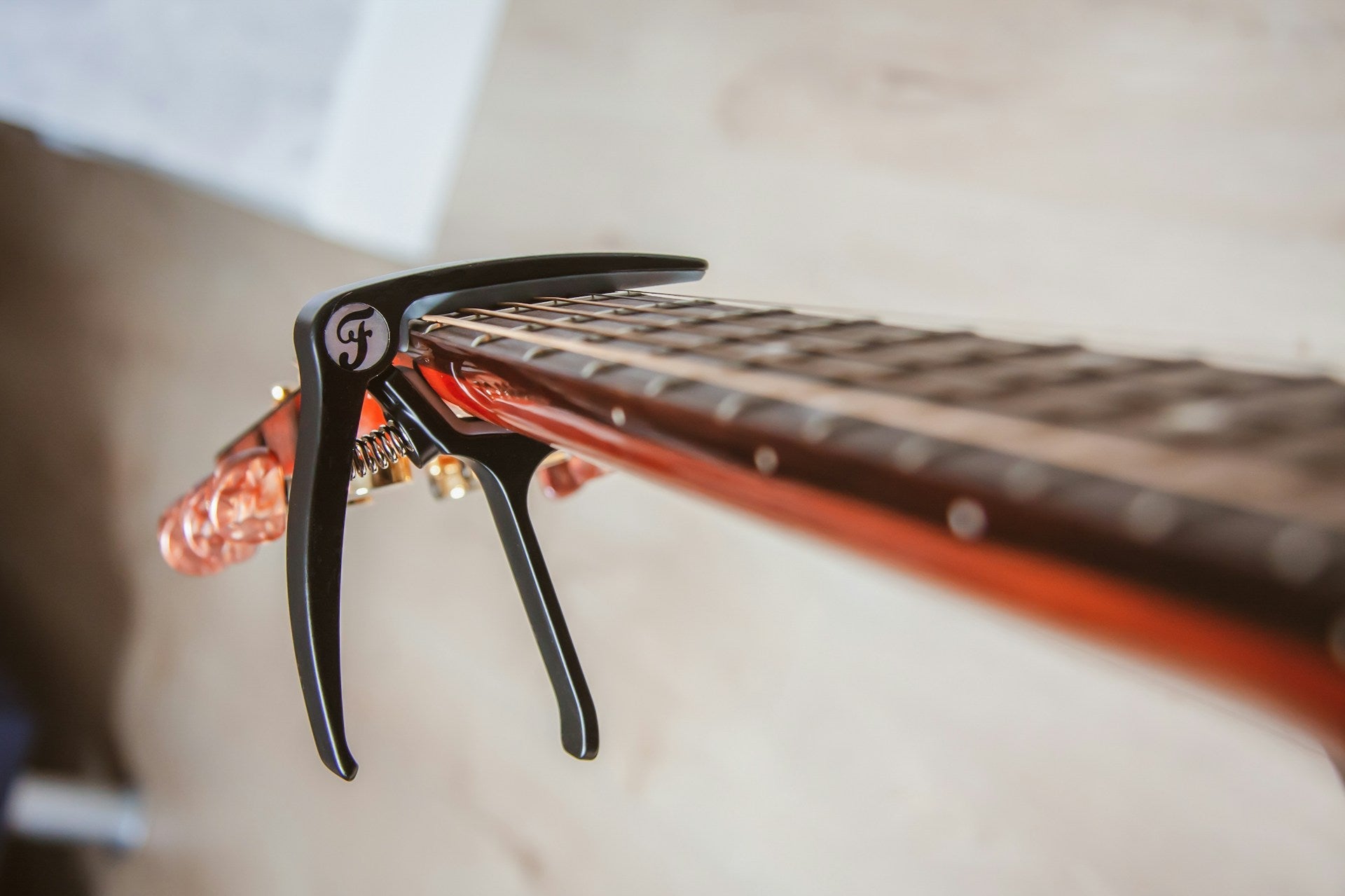
What Causes Buzzing With Quick Change Guitar Capos
If you've ever clamped on a quick change guitar capo and noticed that strange, annoying rattling sound, you're not the only one. Buzzing can show up fast and kind of ruin your playing, especially when you’re in the middle of practicing, recording, or just trying to enjoy a quiet moment with your guitar. One minute, you’re in tune and everything feels smooth. The next minute, it sounds like a string is loose or something’s not sitting right.
The quick change guitar capo is built for speed and ease, but that "click and go" approach can sometimes bring along extras you didn’t ask for, like buzzing or dull notes. When things don’t sound right, it’s natural to blame the capo, but there’s usually more going on underneath. Let’s break it down and look at where that buzzing might be coming from, and what you can do to cut it out so your music stays clear and full.
What Buzzing Sounds Like and Why It Matters
Buzzing can show up in all kinds of ways. It might sound like a faint rattle on just one string or a steady, harsh vibration in a full chord. You might hear it right after placing your capo or only when you strike certain notes. No matter how it starts, it’s always distracting. It can kill the confidence in your playing, especially when you're trying to stay focused during a song.
What makes buzzing so frustrating is that it doesn’t always show up the same way. It can fade in and out depending on how hard you’re holding a chord or whether you hit a string just a little rougher. And even though it may seem like a small problem at first, it can make everything feel off balance when you’re playing. You lose some of that tight, clean sound that makes your guitar feel fun to play.
More than that, it pulls your attention away from the playing itself. Instead of thinking about the next chord or letting your fingers move freely, you're stuck wondering which string is causing the problem. Fixing it is about more than making better sound, it’s about getting back to an easy, natural playing flow.
Common Causes of Buzzing with Quick Change Capos
Not all buzzing comes from the same thing, but if you’re using a quick change capo, the buzzing often has to do with how and where it's sitting on your neck. Here are a few of the big reasons players run into it.
- Capo placement matters. If you clamp it too close to the fret or too far away, it can throw off the pressure. Too close and the string might push up slightly, creating uneven tension. Too far back and it might not press the string down enough, letting it rattle.
- Uneven pressure is another issue, especially if some strings are thicker or lighter than others. The capo might grip the low E just fine while barely catching the high B or E string. That leads to parts of your chord ringing while others buzz or drop out.
- The shape of your neck and health of your frets play a part too. If your fretboard has a slight curve or a fret that’s worn down more than the one before it, your capo can’t sit flat and balanced. Even if it looks fine at first glance, that small tilt can create problems.
Simple adjustments with your capo’s position can sometimes fix things on the spot. But often, the root cause starts somewhere else, and that leads us to the guitar itself.
When the Guitar Itself Might Be the Problem
Sometimes the problem isn’t the capo at all. Guitars age, fretboards wear down, and strings lose their shape. All of these can lead to weird sounds, especially once you add extra tension with a capo.
Here are a few things that can make buzzing worse.
- Frets that are too high or too low in places. As your guitar gets older, frets can shift slightly or get worn from use. If one fret sits lower than others, a fine capo won't grip evenly, and buzzing follows.
- Old or lighter strings. Used strings might coil differently, not sitting as flat beneath the capo. Some lighter strings need more gentle tension, and a standard capo force might pull them sharp or cause that buzzing at the nut or saddle.
- Neck tension. If your guitar’s neck has a slight bend or has been through changes in dry, cold air (which often happens around winter), the capo interacts differently along the neck. A small bow in the neck can make everything harder to line up correctly.
A guitar that’s properly set up will always work better with a capo, but sometimes it takes a closer look from a guitar tech to spot what’s really going on.
Tips That Can Reduce Unwanted Noise
While a full fix might need a little expert help, there are a few things we always double-check first when buzzing starts. These adjustments are easy to try, and they often smooth out the sound quickly.
- Move the capo right behind the fret. You don’t want it right on top of the fret or halfway between two. Placing it directly behind the target fret gives you the best balance.
- Make sure it's pressing all strings evenly. Clamp it slowly and check each string by plucking it. If one sounds dull or buzzes, take a closer look.
- Tune after placing the capo. Putting a capo on can shift your tuning slightly, especially if it's been pressing down unevenly. A quick check with a tuner can clean that up fast.
Don’t forget that if none of these help, or the buzzing keeps coming back in the same spots, the guitar might need a deeper look. That’s nothing to be embarrassed about, capo issues highlight things players might otherwise miss about their setup.
Better Sound Starts with the Right Fit
Buzzing from your quick change guitar capo can really take the energy out of your playing. But most of the time, it’s caused by things that can be spotted and adjusted with a little care. From where you put your capo to how your strings and frets are holding up, it all plays a part in keeping your music clean and smooth.
The way your capo fits your playing style matters more than you might think. You don’t need to change the way you play, just pay attention to how your gear fits into the flow. When your capo and guitar work together, the sound stays natural, free of distractions, and ready for whatever kind of music you’re in the mood to play.
For gear that fits the way real players play, check out the capo options at Kyser Capos. We've spent years building tools that work smoothly with your hands and your guitar. Visit www.kysermusical.com to learn more.
At Kyser Musical Products, we design accessories to help you play with confidence and minimize sound issues, whether you’re practicing at home or performing on stage. A reliable capo can transform your experience by letting you focus on your music instead of troubleshooting gear. Explore our most popular option, the quick change guitar capo, and discover the difference it can make for your playing style. Have questions or need advice on choosing the right fit? Our team is always here to help.

Leave a comment
This site is protected by hCaptcha and the hCaptcha Privacy Policy and Terms of Service apply.