
Understanding Classical Capo Fit for Fingerpicking Versatility
Fingerpicking on a classical guitar asks for a lighter touch and more control than strumming or flatpicking. The way your fingers move across the strings changes everything about tone and feel. That means the gear you use matters too.
If you’ve ever tried fingerpicking with the wrong capo, you might have noticed the tone getting muddy or a string sounding out of tune. Even something as small as a capo can make a big difference in how clean and full your notes sound. Just like switching from a classical to a steel-string or even using a capo for electric guitar, adjusting your setup to fit the playing style matters more than people sometimes think.
Why Classical Guitars Need a Different Capo Fit
Classical guitars don’t have the same shape and tension as steel-string guitars. Their necks are wider, the fretboards are flatter, and they usually come with nylon strings. These things all change how a capo needs to work.
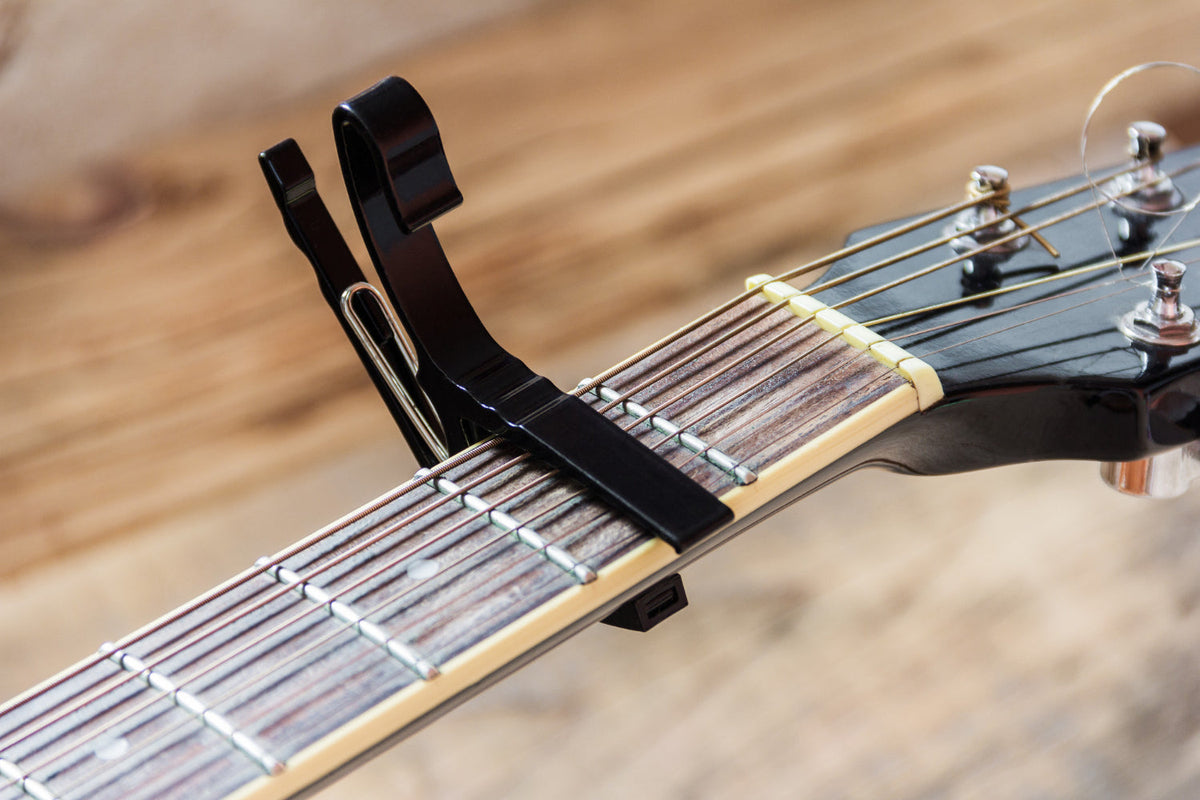
Nylon strings are softer under your fingers and respond differently when pressed. If a capo squeezes too hard or doesn't match the shape of your neck, it can pull notes sharp, create uneven pressure, or make some strings buzz. Kyser offers a dedicated Classical Guitar Capo that is designed for flat fingerboards and the wider necks typically found on classical guitars, with tension balanced specifically for nylon strings so notes stay clear and expressive.
Here’s why getting the right fit matters on a classical guitar:
-
Wide necks mean standard capos don’t always reach across cleanly
-
Flat fretboards need a capo with less curvature for balanced contact
-
Lower string tension means too much squeeze throws off intonation
-
Nylon reacts more to pressure, making fine adjustments more important
Using a capo made for a steel-string can work in a pinch, but it’s more likely to cause small issues that add up during practice or performance.
Fingerpicking Style and Capo Pressure
Fingerpicking relies on precision. Every note needs to be clear, and you’re usually working across every string in a single pattern. That puts a spotlight on how the capo holds each string down.
If the capo presses unevenly, even just a little, that shows up in your tone. Bass strings might sound dull, while the trebles ring out louder. Or you might hear the note bending sharp as you pluck near the nut. When you're not strumming to cover up gaps in volume, these flaws stand out.
We’ve seen that some capos do better for fingerstyle play because you can control how much pressure they apply and where they sit. That flexibility can help with tone and comfort, especially when you're working through a detailed fingerpicking passage.
Match the Capo Shape to Neck Profile
Classical guitar necks come in different shapes, some are flat, some have a gentle curve, but most are quite different from the average steel-string guitar. That neck shape, or profile, affects which capo fits well.
If a capo has too much curve and the fretboard is flat, strings in the middle might press too hard or not at all. The result is uneven tone or muted notes. A flat capo on a curved neck can leave you with loose outer strings that buzz or fall slightly out of tune.
Testing different designs is a helpful way to find the match that keeps pressure even without making it too tight. Here’s what we recommend keeping in mind:
-
Look for a capo that matches the width of your guitar’s neck
-
Try one with adjustable tension to dial in the fit
-
Watch for pressure across all strings, especially when playing fingerstyle
-
A secure grip without strain helps tone stay clean and consistent
Getting the shape right may feel like a small thing, but it can reduce how often you need to retune during a session. Kyser Classical Guitar Capos are made in the United States from lightweight aluminum in a finish-safe Quick-Change design, so you can adjust position easily while still protecting your neck and fretboard.
When Players Switch Between Guitars
We hear from players all the time who swap between classical guitars and steel-string models. Some even switch to electric setups in the same day. That makes capo choice more complicated than just grabbing the first one you see.
For example, the capo that works on your nylon-string classical might not do well when clipped onto an electric guitar. The pressure needed, the neck shape, and the string spacing are all different. That’s one of the reasons we remind people how gear like a capo for electric guitar is built with those changes in mind.
If you regularly switch instruments, it helps to keep a few things in check:
-
Pay attention to buzzing, tuning drift, or squeeze when changing guitars
-
Keep more than one capo in your case if you use different neck sizes
-
Check how pressure feels when fingerpicking on each setup
-
Don’t force one tool to fit every guitar, it usually catches up to you
It doesn’t mean you need an entire toolbox of extras, just a little awareness of what works best for each guitar.
Stay Smooth in the Summer Heat
Summer doesn’t just change how your guitar feels, it changes how your capo behaves too. Warm weather brings heat and humidity, both of which can affect your gear in ways that sneak up on you.
Wood expands when it’s humid, and that includes your guitar’s neck. String height may change just enough to throw off your tone. A capo that felt perfect indoors might start slipping when you’re at an outdoor rehearsal or show. If you’re setting up on a hot stage or playing outside, you might find a change in grip or an odd buzz where there wasn’t one before.
Here’s how summer can throw things off:
-
Humid air can swell your neck slightly, changing string spacing
-
Heat softens some rubber parts, affecting capo pressure
-
Sweaty hands and slick surfaces increase the chance of slippage
-
Quick setup times at outdoor events don’t leave room for readjustment
Giving your gear a little time to adjust to the temperature, especially a capo, can help avoid some of those small surprises.
Fine-Tuned Fit Leads to Better Playing
When your capo fits just right, fingerpicking tends to flow better. You're not fighting to adjust tone on the fly or distracted by odd tuning quirks. It just feels easier.
A good fit supports each string evenly and works with your touch instead of getting in the way. And once everything is balanced, you can spend more time focusing on music and less time fixing small problems that crop up from mismatched gear.
Whether you play nylon, steel, or switch between both, making sure your capo matches your guitar and your playing style brings better control and a cleaner tone. Fingerpicking already calls for focus and precision. Having the right gear just makes that work feel a little more natural.
Whether you're moving between guitars or perfecting your fingerstyle technique, having a capo that matches each instrument is important. Electric setups require a precise balance of pressure and neck grip, which can differ from what works on acoustic or classical models. To keep your tone smooth and your tuning reliable, check out our selection designed to work seamlessly as a capo for electric guitar. At Kyser Capos, we’re here to help you find the right fit for your playing style, so send us a message if you have questions or need help deciding what works best for your setup.

Leave a comment
This site is protected by hCaptcha and the hCaptcha Privacy Policy and Terms of Service apply.